I’m all for adaptive language. For example, everyone knows remora aren’t parasites.
But words used to mean things!!
In SEO, I think it’s mostly fine to use any terminology you need to to get your point across. I’ll even entertain something like “dofollow” because even though it’s not real, even though I think it’s a massive signal someone may not truly understand the mechanisms behind what we’re trying to accomplish, and even though it can lead to silly things like people adding rel=“dofollow” to their websites, still it’s about as harmless as misinformation in SEO can be and when someone says it to me I know what they mean (even if I’m not entirely sure they know what they mean).
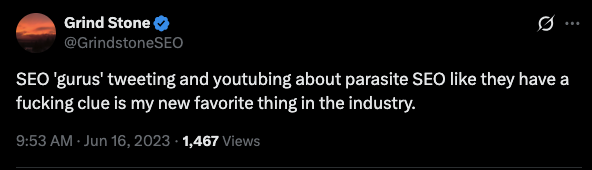
However, one thing that’s been showing up a lot lately that I can’t get over as easily is this huge resurgence of “Parasite SEO” being done in the most thoughtless way possible.
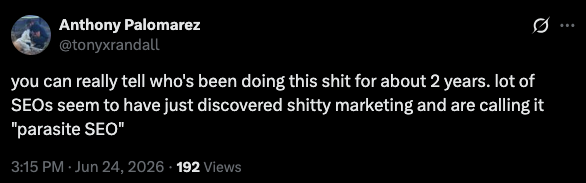
There’s this subset of SEOs whose experience in this space is entirely in the post LLM era and they’re making a bunch of recommendations that those of us who’ve been doing this a while have seen countless sites get decimated for.
From what I can tell, the current wave of this “advice” basically boils down to:
- make a bunch of spam posts in Facebook groups using your keywords
- create several different versions of your website to host on all the free platforms like vercel, cloudflare pages, github pages etc. (I don’t think most of them have gotten this advanced yet honestly)
- Claude public artifacts (cuz you gotta incorporate Claude in everything you do these days for some reason!)
- Medium, and anywhere else you can create an account to post your shitty spam.
- make your own subreddit to post on because reddit isn’t famously hostile to marketing or SEO!
And then, good job, for all of your efforts you can now rank your fake reviews for all of the results when someone searches for your brand name. Which is really great because now instead of finding all of your social media accounts they could follow and engage with or any other real content about your brand from actual users, people searching for your brand are now immediately introduced to a bunch of obvious slop! Brilliant. Incredible marketing.
There used to be strategy behind these things!
Historically, it was a mostly black hat (though there were a lot of more “legitimate”* ways to do similar things as well but most of those are just what I would call “marketing”.), frequently unethical and possibly even illegal at times tactic of using other websites’ authority to rank your own content. It often required technical skills above and beyond the capabilities the average SEO. I don’t want to go as far as to say I respected it but certainly there were some elements of it that could be applied in a more traditional, sustainable, “white-hat” manner.
- I don’t know if “legitimate” is the right word, I’m just saying a lot of what you’d consider Parasite SEO would be things you may not want to do too much of for a site you cared a lot about or or at least if you weren’t preparing for the consequences.
I once ranked for a highly searched commercial term in the education space because I found an area on MIT.edu where I could post my client’s resource and I made the title of it that search term and it worked because it was entirely relevant, it sent real traffic.
Now, it’s all about indexing a guide on Perplexity pages about your vibecoded tool so you can rank it for “[brand name] guide” instead of just, you know, publishing that content on your website where it should be?
I probably shouldn’t care so much about this but these people are giving this advice out to real clients, people trying to build actual brands, and that’s who gets harmed in the long run (that and the reputations of people who’ve built entire careers and skillsets in SEO, because the people peddling this type of shortsightedness are just going to move on to the next grift once Google and especially the LLMs catch up. The rest of us will still be here cleaning it all up.). Some of these tweets I’m seeing about “Parasite SEO” have more engagement than just about any other SEO content on Twitter which is kind of depressing thinking about the glory days of SEO twitter.
Anyways, there are more sustainable ways of doing “Parasite SEO” to really own a SERP.
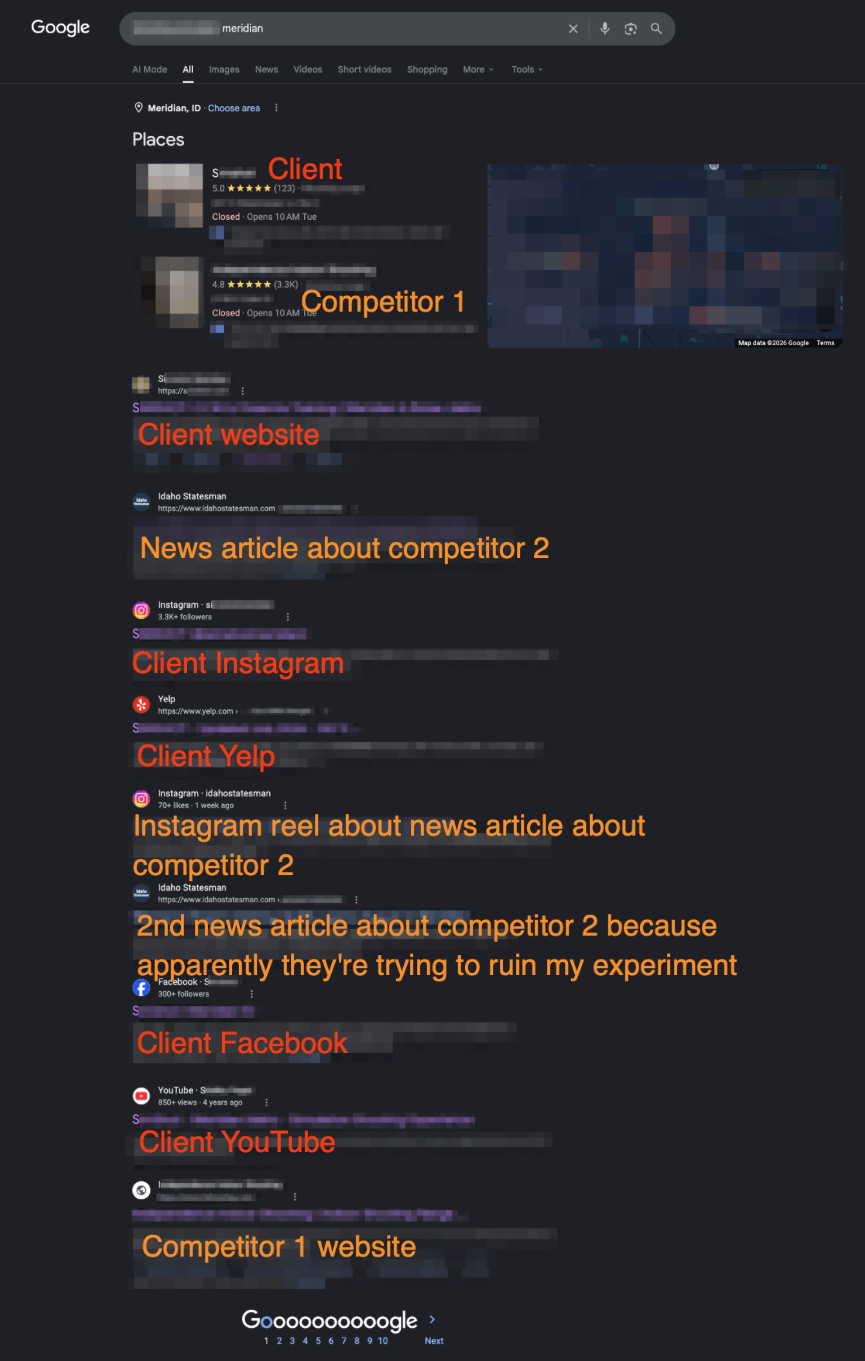
Here’s an example of something I did for a local client recently. For one of their main terms, I wanted to see if I could dominate a SERP with their site and social media profiles, so I built a few exact match anchor text links to their instagram, facebook youtube and yelp pages and now they’re half of the results for one of their main search terms (this is not a branded search like most of the Parasite SEO examples I see floating around, although one of the words is in competitor 1’s brand name).
What’s more sustainable and what looks better to a potential customer, this or a bunch of obviously slop fake reviews hosted on free domains or… Tumblr? It would have been way easier to spin up a bunch of content containing this search term, but this way looks like we’re the most trusted brand in town. The alternative is just a bunch of spam that’s going to potentially turn clients away.